Cape Town Day Tours
I’m Serious Day Tour Man AI, your day trip expert. Ask me anything — where to go, how to get there, and what’s actually worth your day.
Cape Town has some of the best day trips in the world. One loop collects penguins, a cliff-edge coastal road, and the famous cape — which is not, despite the marketing, where two oceans meet. The wine country has a tram so nobody has to drive. From June to November, whales come close enough to shore to watch from a bench. And a ferry runs to Robben Island, where Nelson Mandela was imprisoned. That’s the most important booking in the city.
Three things to know before you plan. Book Robben Island first, because ferries sell out and weather cancels them. Go up Table Mountain on the first clear morning, not your last day. And read the shark-cage marketing with skepticism — the great whites have mostly left these waters, and the honest operators say so.
Here’s what’s worth a day, with real times and honest trade-offs.

Popular Day Trips
Cape Point
The Peninsula Drive, the Baboon Rules
Winelands
The Tram Solution, Stellenbosch or Franschhoek

Hermanus
The Whale Calendar, the Cliff Path
The Cape Peninsula Loop
This is the essential day trip. Drive south along the Atlantic coast, cross Chapman’s Peak Drive, visit Cape Point, and finish with the penguins at Boulders Beach. Do it as a tour or a self-drive. Start early and go counterclockwise, Atlantic side first — you’ll stay ahead of the tour buses all day.
Chapman’s Peak Drive is a toll road cut into the cliffs between Hout Bay and Noordhoek, with 114 curves above the sea. Check that it’s open before you go. Rockfalls and bad weather close it, and the inland detour is dull.
Cape Point sits inside the Cape of Good Hope section of Table Mountain National Park. Take the funicular or walk up to the old lighthouse for the view. Two myths to drop at the gate: this is not where the Atlantic and Indian oceans meet — that’s Cape Agulhas, three hours east — and it is not the southern tip of Africa. It’s simply one of the great headlands on earth.
About the baboons: keep your windows up and doors locked at every stop. They know how to open car doors. Never show food. Feeding them carries real fines, because baboons that learn to raid cars end up being put down.
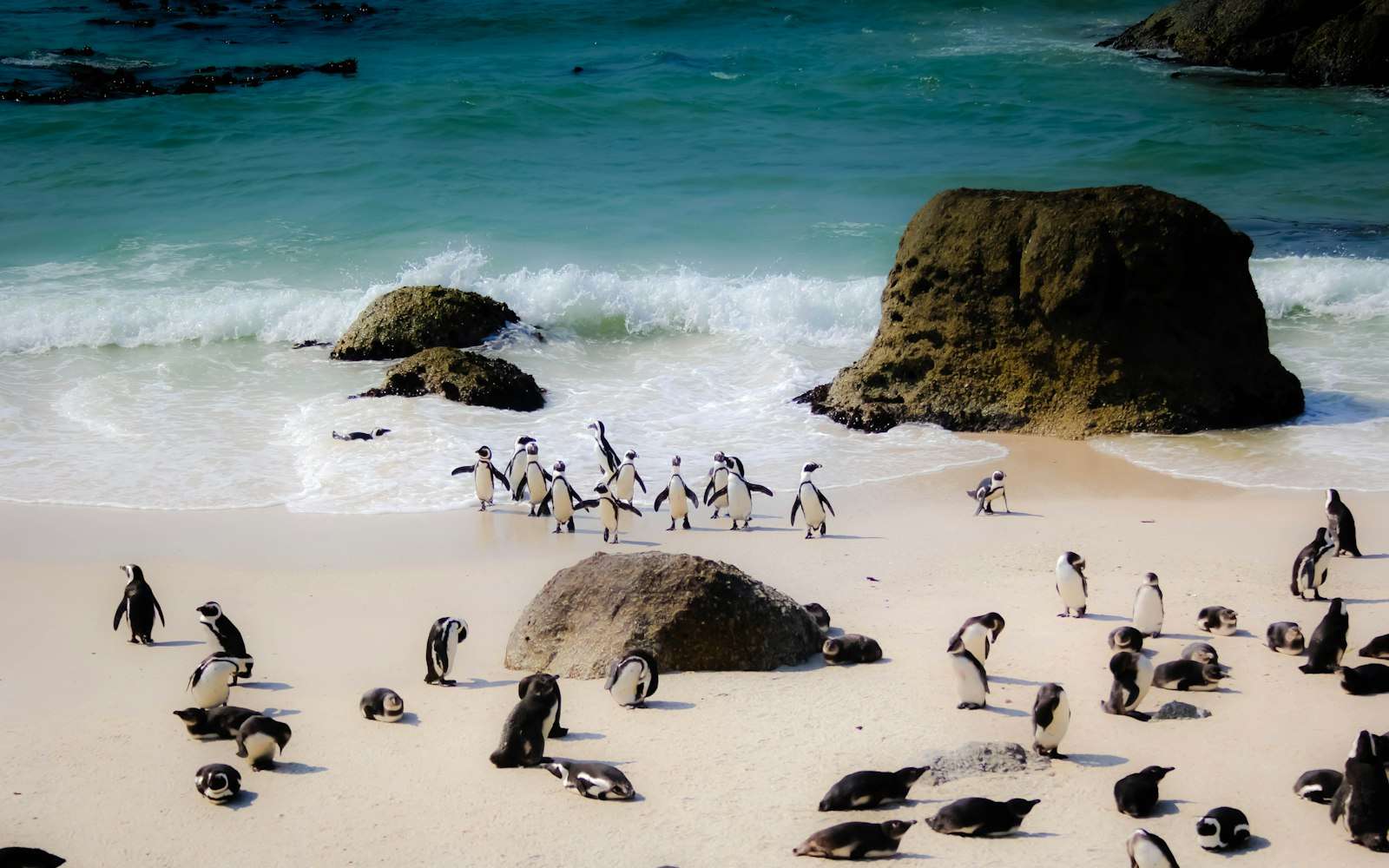
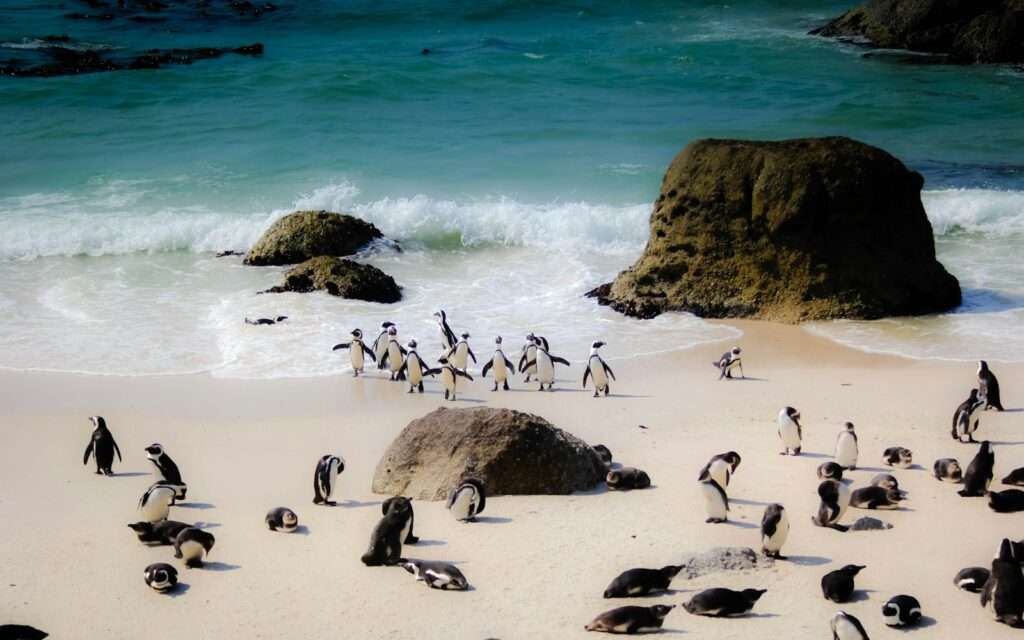
Boulders Beach, at Simon’s Town, holds a colony of endangered African penguins. Boardwalks take you within a few meters of them, and the entry fee funds their protection. You can swim in the sheltered coves next door, where penguins sometimes paddle past. Have lunch at Kalk Bay harbor or in Simon’s Town on the way back.
The Winelands — Stellenbosch, Franschhoek & the Tram
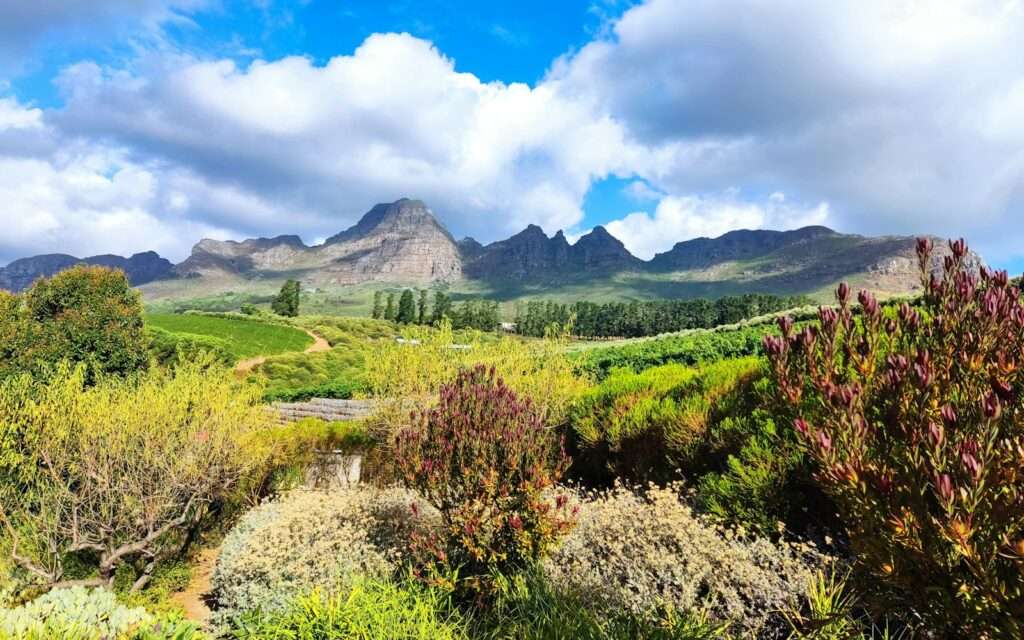
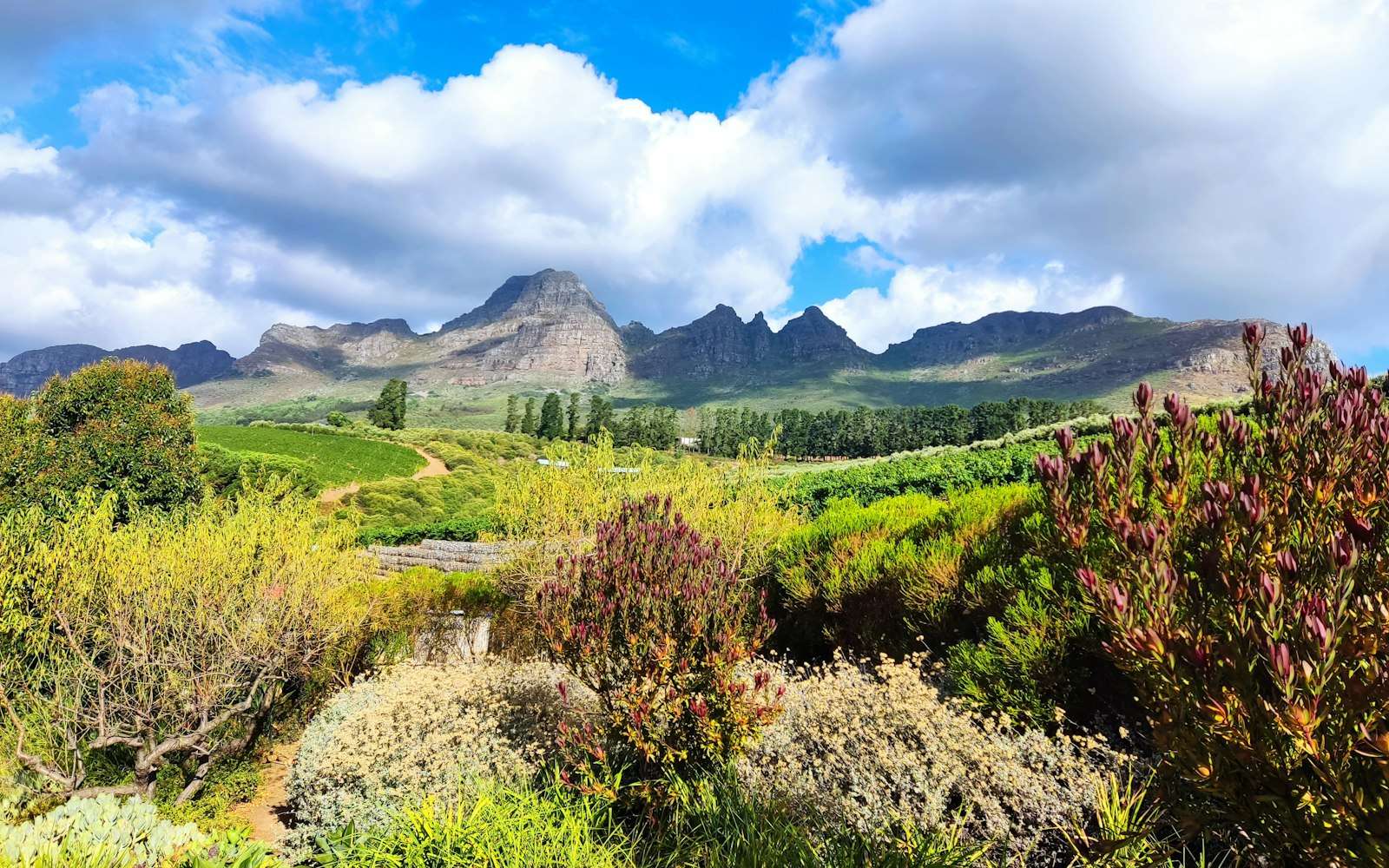
Franschhoek and Stellenbosch are the two main wine towns, 45 minutes to an hour east of the city.
Franschhoek is the easier day. The Franschhoek Wine Tram is a hop-on-hop-off tram and bus circuit that connects the estates, so nobody in your group has to stay sober to drive. Book your tram line and the first departure of the day in advance. The estates at the far ends of each route are quieter than the ones near town.
Stellenbosch is the older university town, with oak-lined streets, Cape Dutch architecture, and the biggest-name estates. Choose it if you care most about the wine itself. Pinotage, South Africa’s own grape, divides opinion — taste it at the source and decide for yourself. Tastings are generous and cost far less than in other wine regions. Many estates offer pairings with chocolate, biltong, or even salt. They’re touristy but fun.
Plan three estates plus a long lunch. That’s a full day, and more becomes a blur. Babylonstoren, a garden estate between the two towns, is a good single-stop alternative. It books out weeks ahead.
Read the full The Winelands day-trip page.
Hermanus — Whales From Shore
From June through November, southern right whales come into Walker Bay to calve. Hermanus, 90 minutes southeast, has the best land-based whale watching in the world. The whales breach within meters of the town’s 12-kilometer cliff path, which is free to walk. Boats can get closer under permit rules, but the view from shore is often just as good. Bring binoculars and pick a bench. The town employs a whale crier who blows a kelp horn when whales are sighted. The job is real, and the current crier is a local celebrity.
Peak months are September and October. Outside June through November the whales are gone, and the town doesn’t justify the drive on its own.
Add the Hemel-en-Aarde valley just behind town. Its Pinot Noir and Chardonnay are rated the best cool-climate wines in South Africa. Whales in the morning, wine in the afternoon — that’s the day. On Saturdays, start with the morning market.
Read the full Hermanus day-trip page.
Robben Island — Book This First
Robben Island is the prison island where Nelson Mandela spent 18 of his 27 years. Ferries leave from the V&A Waterfront on timed tickets that sell out days or weeks ahead. Book online before your trip, and book it early in your stay — sea conditions cancel ferries often, and an early slot leaves you days to rebook if yours is cancelled.
Former political prisoners lead the prison tour. Hearing the cell block described by a man who lived in it is the reason to go. A bus tour covers the rest of the island, including the lime quarry where the glare damaged Mandela’s eyes, and the island’s earlier lives as a leper colony and a military base.
The visit takes 3.5 to 4 hours door to door. Plan something quiet afterward — the District Six Museum pairs well. Don’t schedule a party evening on the same day.
The Shark Question — What’s Actually in the Water
The brochures haven’t caught up. Gansbaai’s cage-diving industry was built on great white sharks, and the great whites have mostly gone. A pair of orcas that hunt shark livers drove them out of these waters over recent years. Cage dives now run with bronze whaler (copper) sharks. They’re abundant and impressive, but they are not great whites.
Book an operator who says this plainly and publishes honest sighting reports. Avoid anyone still promising great whites.
Two alternatives may be better. Kelp-forest snorkeling near Simon’s Town puts you in the water with cow sharks and seals — this is the habitat from My Octopus Teacher, and it’s now the best in-water wildlife experience in the area. False Bay boat trips cover the seasonal wildlife. One note on ethics: whether chumming harms the ecosystem is a real and unresolved debate. Operators work under permits and observation. Weigh it for yourself.
Table Mountain, Bo-Kaap & Cape Town Itself
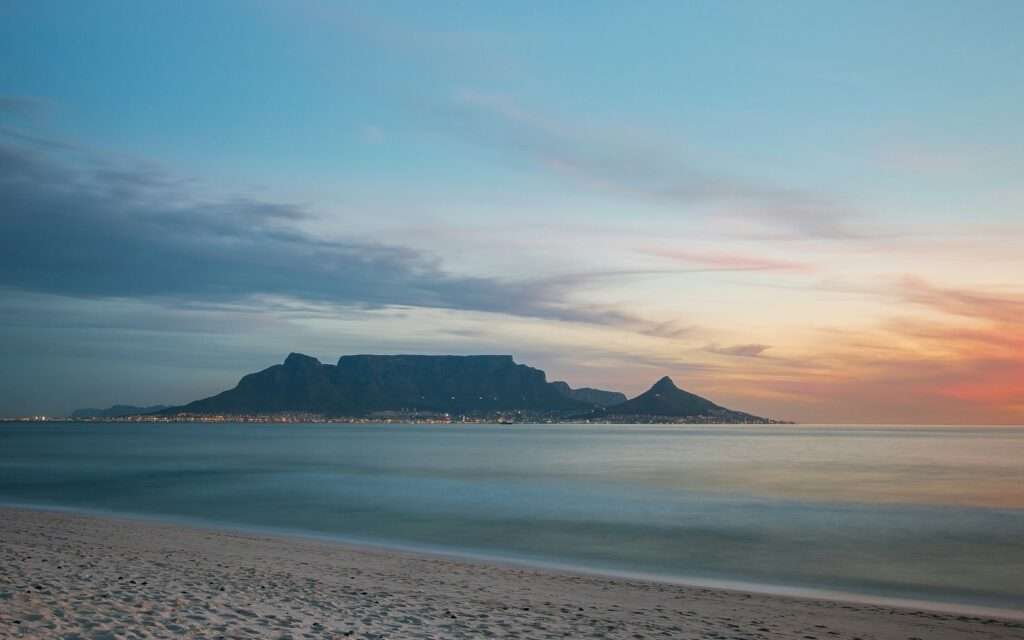
Go up Table Mountain on the first clear morning of your trip. Don’t save it for the last day. The “tablecloth” cloud closes the cableway with little notice, so check the webcam at breakfast and go when it’s clear. Book cableway tickets online — the flexible return ticket is worth it.
If you’d rather hike, Platteklip Gorge is the direct route up: steep, exposed, two-plus hours. Carry more water than you think you need. People die on this mountain most years because the weather turns in minutes. Plan to take the cable car down. Skip India Venster unless you’re an experienced scrambler — its “easy” reputation is wrong. Lion’s Head at sunrise or full moon is the popular alternative. Arrive early; those hours draw a crowd.
Bo-Kaap’s painted houses are a living Cape Malay neighborhood, not a photo set. Take a walking tour run by residents, or a cooking class in a family home. Bobotie and koeksisters are the dishes to learn. Kirstenbosch, the botanical garden on the mountain’s eastern slope, is one of the finest in the world — walk the Boomslang canopy walkway, and catch a sunset concert in summer. The V&A Waterfront has the shops, the restaurants, and the Robben Island ferry terminal.
On safety: the tourist areas are fine with normal city awareness. Don’t flash valuables. Use ride-hail at night instead of walking quiet streets. Ask locals for current advice — it changes.
The food is a highlight. Eat Cape Malay in Bo-Kaap, braai and biltong everywhere, and fine dining that the exchange rate makes surprisingly affordable. The best weather runs November through March, though the “Cape Doctor” southeaster can blow hard for days at a time. Whale season is June through November. The shoulder months are the calmest on the mountain and in the winelands.
Full day-trip pages: Cape Point.
Frequently Asked Questions
Is the Cape Peninsula the best day trip in Cape Town?
Yes — Chapman’s Peak, Cape Point, and the Boulders penguins in one loop. Keep windows up around baboons (they open doors), and start early counterclockwise to stay ahead of the tour buses.
When can you see whales in Hermanus?
June through November, peaking in September and October. It’s the world’s best land-based whale watching, free from the cliff path. Outside the season, the whales and the reason to drive are both gone.
How far ahead should you book Robben Island?
Days to weeks — and early in your trip, so a weather-cancelled ferry can be rebooked. Former political prisoners guide the prison section. It’s the most important ticket in the city.
Are there still great white sharks at Gansbaai?
Mostly not. Orca predation drove them out, and today’s cage diving runs with bronze whaler sharks. Book operators who say so plainly, or take the kelp-forest snorkel with the cow sharks instead.
What’s the rule for Table Mountain?
Go up the first clear morning, not the last day — the tablecloth cloud closes the cableway without notice. If you hike, take Platteklip seriously: steep, exposed, and the weather turns in minutes.