Hermanus from Cape Town
June to November, southern right whales fill Walker Bay close enough to watch from shore — and Hermanus’ cliff path is the best land-based whale watching anywhere. Out of season, come for the wine and say so honestly.
The short version
- The drive runs about 1.5–2 hours: the N2 is the quick way, and Clarence Drive (R44) around the mountainside from Gordon’s Bay is the scenic one — cliff-hung coastal miles the alarm assigns to at least one direction.
- Southern right whales migrate into Walker Bay June through November to calve and raise young in the sheltered water — August to October is the density peak, with mothers and calves often inside the kelp line, binocular-close from shore.
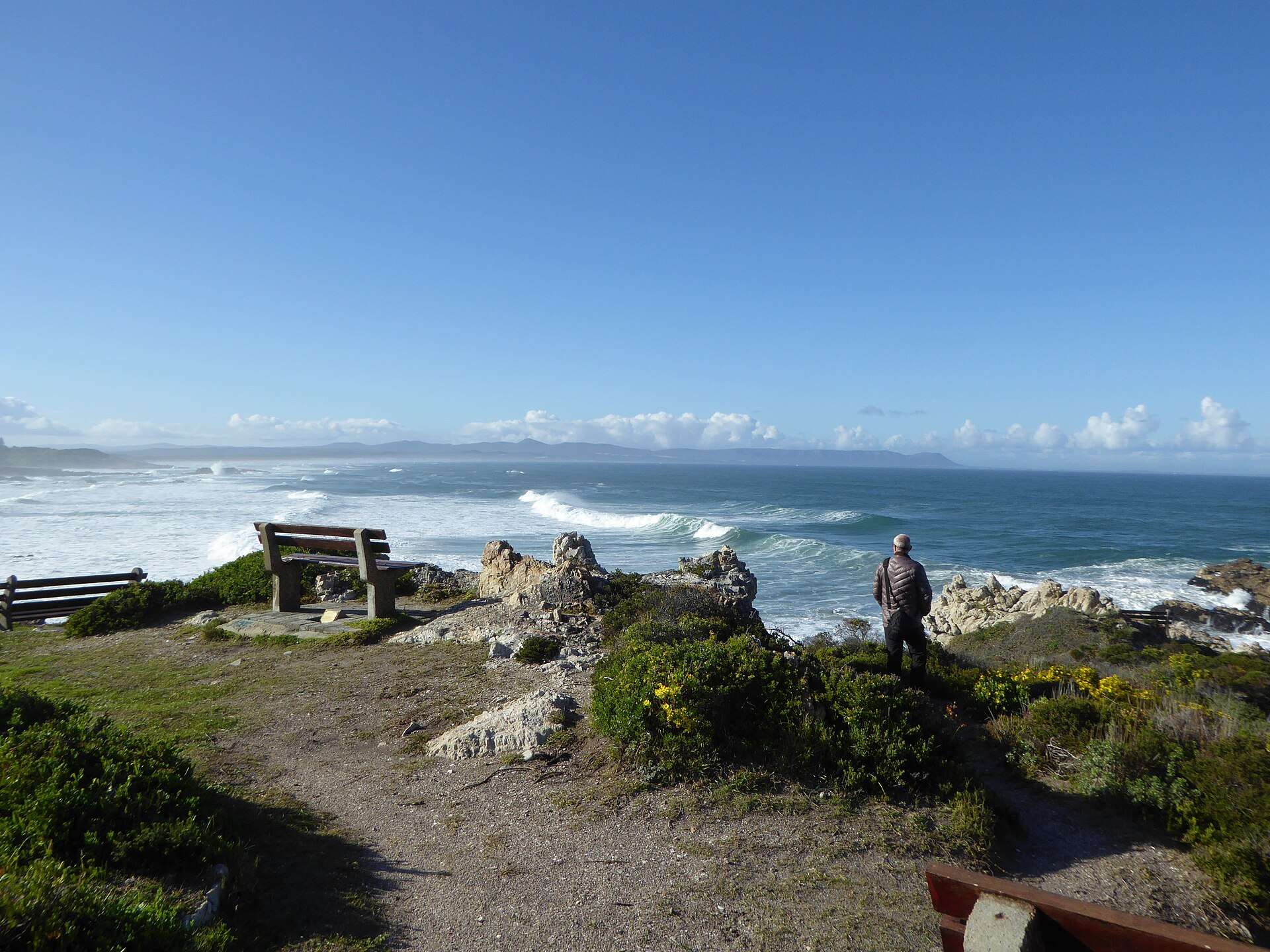
- The cliff path runs some twelve kilometers along the town’s shoreline — free, gated nowhere, benched generously — and its geography over deep water close to shore is what makes the land-based-watching claim stand at world level.
- The whale crier — the town’s uniformed institution — sounds a kelp horn and posts the day’s sighting spots in season: follow the horn, per the alarm, and the job title is exactly what it says.
- Boat-based encounters and scenic flights run from the town in season under permit rules that govern approach distances — the paid upgrades to a headline act that shore-watchers get free.
- The Hemel-en-Aarde valley behind town pours some of South Africa’s best pinot noir and chardonnay at cellar doors minutes from the cliff path — the wine is the year-round act and the off-season’s whole honest case, alongside Fernkloof reserve’s fynbos trails above town.

Getting there
Clarence Drive out, N2 back is the standing route plan: the R44 rounds False Bay’s eastern wall with pull-offs over kelp coves (and, in season, whale sightings before you’ve arrived), while the N2 over Sir Lowry’s Pass runs the efficient return. There’s no practical transit; it’s a drive, with the designated-taster arithmetic applying to any Hemel-en-Aarde ambitions. In peak whale months, weekend parking in the town center tests patience — the eastern cliff-path trailheads park easier and walk you in along the best water anyway.
The day
In season, the cliff path is the itinerary: park anywhere along it, walk toward the horn, and let the bay set the schedule — southern rights breach, lobtail, and loll close enough that the naked eye works and binoculars feel like cheating. Gearing the day low is the whole method: benches, coffee from the town’s kiosks, and the patience the whales reliably repay in peak months. The Old Harbour’s museum corner and the market square fill the midday; lunch runs seafood with the bay still in view. The afternoon chooses between more path — the eastern stretches toward Grotto Beach run quieter — a permitted boat trip for the water-level angle, or the Hemel-en-Aarde’s cellar doors twenty minutes behind town for the pinot that built the valley’s name. Off season, invert the day: wine first, Fernkloof’s fynbos loop for the protea months, and the path taken as a handsome coastal walk on its own terms. Clarence Drive’s return leg westward lands the sunset over False Bay.
When to go
August through October is the peak inside the June–November season — calving mothers, curious calves, and the crier’s horn earning its salary daily. The Hermanus Whale Festival (typically late September) adds a long weekend of crowds to the best watching. December through May is the alarm’s other Hermanus: beaches, wine, fynbos, and expectations set right — a fine coastal day that simply isn’t a whale trip. Winter weekdays in season are the connoisseur’s slot: full bay, empty benches.
Frequently Asked Questions
Will I definitely see whales in season?
In the August–October peak, a patient hour on the path makes a sighting close to routine — the bay hosts dozens of animals and the crier aggregates the day’s action. June and November run thinner and luckier. Nothing wild is guaranteed; these odds are as good as shore-watching gets anywhere.
Is the boat trip worth it over the free path?
The permitted boats add water-level proximity and expert commentary at real cost — worthwhile for enthusiasts and photographers, unnecessary for a first great encounter, which the path already delivers free. The permit rules govern approach distances either way; the whales close the gap themselves when they choose.
What exactly does the whale crier do?
Walks the path in season sounding a kelp horn in codes that point to the day’s sighting spots, chalkboard updates included — a tourism office institution since the early 1990s and likely the world’s only such job. Following the horn is the local operating system.
Hermanus or Cape Point with one Cape Town day?
Cape Point (documented on this network) for the peninsula’s drama year-round; Hermanus for the whale season’s singular show. In August–October the whales win the argument; the rest of the year the Point does. Both is the full week’s answer.
What about shark cage diving nearby?
Gansbaai’s operators run cage trips twenty minutes on — a separate early-start day with its own booking rules and its own ethics debate, which travelers weigh themselves. This page’s day is the whales from shore; combining both compresses each.