The Winelands from Cape Town
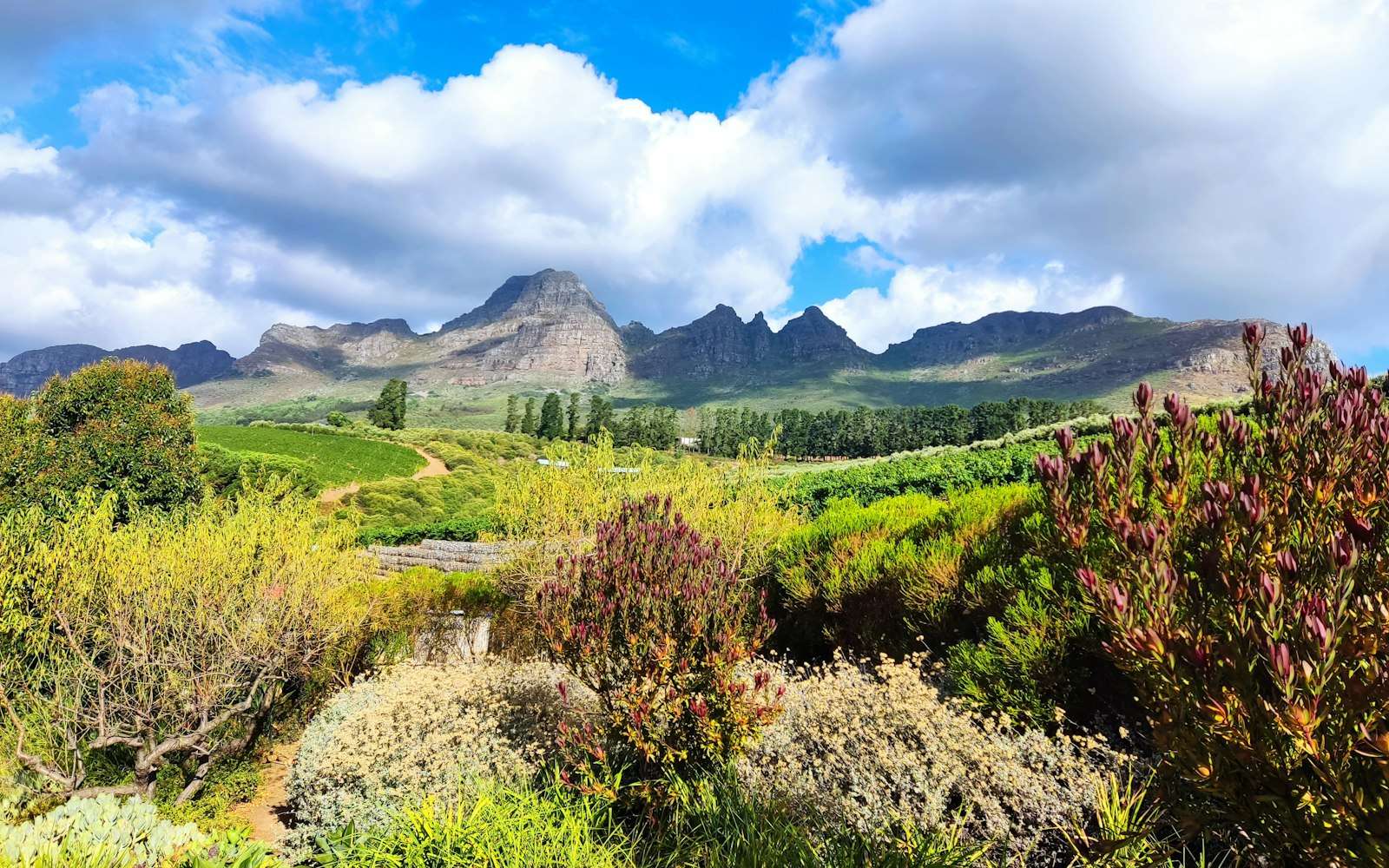
Forty-five minutes inland, the Cape’s wine valleys run under sandstone mountains at prices that embarrass the northern hemisphere — and one of them solved the designated-driver problem with a tram.
The short version
- The valleys sit 45–60 minutes east of the city — an easy drive with the usual sobriety arithmetic attached, or a tour seat, or the tram package that removes the question entirely.
- The Franschhoek Wine Tram runs hop-on lines through the valley’s estates on rails and connecting shuttles — book the line and departure ahead at winetram.co.za, and treat the last tram like a flight.
- Tasting fees run a fraction of California’s — modest sums often waived with purchases — which converts the day from budget event to ordinary pleasure; estate booking norms still apply on weekends.
- Stellenbosch is the university town with oak-lined streets, Cape Dutch gables, and estates ringing it in every direction — the history-and-architecture valley; town details at visitstellenbosch.org.
- Franschhoek — the Huguenots’ ‘French corner’ — concentrated the country’s restaurant fame into one main street and its estate kitchens; the long estate lunch is the valley’s true format.
- The wines themselves: chenin blanc as the national card, pinotage as the local invention, and cap classique bubbles that treat their French benchmark as a colleague rather than a superior.

Getting there
Three clean options: self-driving with a designated abstainer (the N1/R310 runs simple and scenic), a small-group tour handling estates wholesale, or the Franschhoek-based tram day — drive or transfer to the village, then let the rails and shuttles run the hopping. The tram books out summer weekends ahead, per the alarm. Splitting the difference, many do Stellenbosch by car with discipline and save Franschhoek for the tram’s turn.
The day
One valley, chosen deliberately. The Stellenbosch version: a morning estate with history attached (the old names run tastings in buildings older than most countries’ constitutions), the town’s oak streets and gallery browse at midday, then a second estate with mountain views for the afternoon flight. The Franschhoek version: tram from the village, two or three estate stops paced by the timetable, and the long lunch as the day’s actual summit — the valley’s kitchens treat the meal as the point and the wine as its escort, which is the correct order. Both versions end with a bottle purchase that the exchange rate makes feel like a clerical error, and the drive or transfer home before dusk.
When to go
October through April is the season — long light, gardens up, harvest energy peaking February into March when the crush makes the valleys smell like the product. Winter (May–September) is the local secret: green mountains, fireside tastings, open bookings, and the food valleys at unhurried best — colder, wetter, cheaper, and argued for by everyone who’s done it. Weekend versus weekday changes the booking math more than the calendar does; December holidays pack everything South African.
Frequently Asked Questions
Stellenbosch or Franschhoek for a first visit?
Franschhoek if the tram and the food are the draw; Stellenbosch for town texture and estate variety. They’re 30 minutes apart and a day each — the alarm’s one-valley rule exists because greed ruins both.
Is the tram touristy?
Cheerfully and effectively — it’s a purpose-built solution running on schedule with commentary, and it beats every alternative that involves someone not tasting. Book the earlier departures for fuller estate time.
How cheap is ‘a fraction of Napa’?
Standard tastings run the price of a coffee or two, frequently credited against purchases; even flagship experiences undercut California’s entry tier. The estate lunch is where the budget goes, deliberately.
Which estates should I book?
The famous names deliver (and need weekend reservations); the working answer is one anchor estate booked plus spontaneity between. Tram riders inherit a curated list by line — half the product’s value.
Can I combine the Winelands with Cape Point?
Not in one honest day — each fills its own, and this network documents both. The classic Cape Town week does them on separate days with a rest-adjacent beach day between.